


Few things cause more instant dashboard anxiety than that small amber engine icon lighting up while you’re driving down Park Boulevard or heading home from work. The check engine light is one of the most misunderstood warning lights on any vehicle. Sometimes it means something serious, and sometimes it’s a $10 fix. The problem is you can’t tell which one it is just by looking at it.
At Mike’s Affordable Auto Repair, drivers throughout Pinellas Park, Kenneth City, and the surrounding Pinellas County area bring their cars in every week asking the same question. “Why is my check engine light on, and do I need to worry?” Here’s what that light actually means, the most common reasons it comes on, and how to know when it’s time to get it looked at.
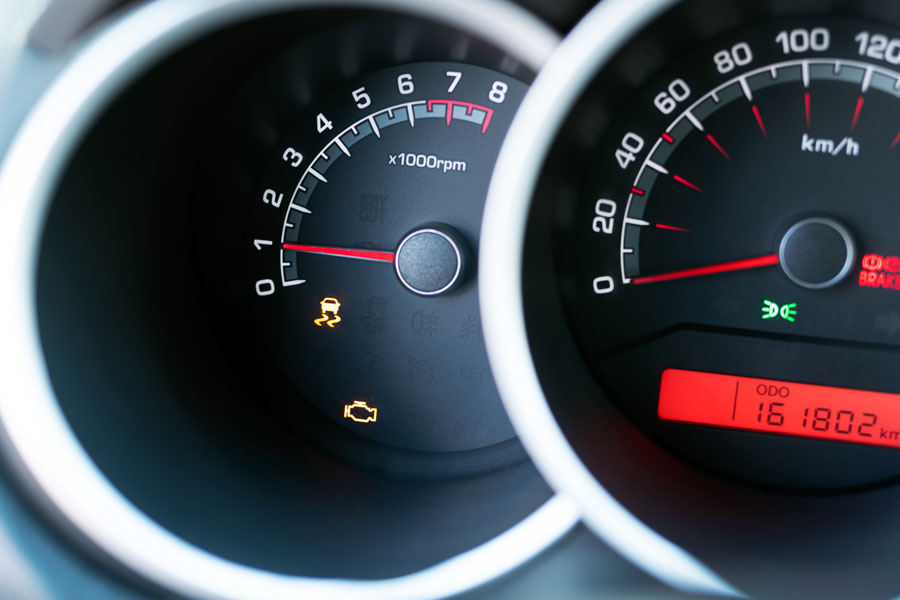
Your check engine light — officially called the Malfunction Indicator Lamp (MIL) — is connected to your vehicle’s onboard diagnostic system (OBD-II on virtually every car built since 1996). This system constantly monitors dozens of sensors and components related to your engine, transmission, and emissions system. When one of those readings falls outside the expected range, the computer stores a trouble code and turns on the light to let you know something needs attention.
The tricky part is that the light itself doesn’t tell you what’s wrong, it just tells you that something is. That’s why a proper diagnostic scan, not guesswork, is the only reliable way to know what’s actually triggering it.
Is it safe to drive with the check engine light on?
It depends on whether the light is solid or flashing. A steady light usually means it’s safe to drive carefully to a repair shop soon. A flashing light signals a serious problem, like an engine misfire. If it’s flashing, reduce your speed and get it checked right away.
How much does a check engine light diagnostic cost?
Diagnostic costs vary depending on the vehicle and the complexity of the issue. At Mike’s Affordable Auto Repair in Kenneth City, we provide an honest, upfront estimate before any work begins. Call 727-565-6000 for current diagnostic pricing.
Why does my check engine light come on and off?
An intermittent check engine light often points to a loose gas cap or a sensor issue that isn’t constant. It can also mean the problem only happens under certain conditions, like heavy heat or humidity. Even if the light turns off, the underlying issue is still there and worth diagnosing.
Can a check engine light fix itself?
Occasionally, yes. A loose gas cap can trigger the light, and tightening it may resolve the issue within a few drive cycles. But if the light stays on, or comes back after turning off, that usually means a real problem needs attention. It’s best to get a diagnostic scan rather than assume it will clear on its own.
What’s the difference between a flashing and a steady check engine light?
A steady light usually means a non-emergency issue that still needs prompt attention. A flashing light means a serious problem, often an engine misfire, that can quickly damage your catalytic converter. If your light is flashing, avoid heavy acceleration and get to a repair shop as soon as possible.
This distinction matters more than almost anything else on this list.
A steady, solid check engine light usually means the issue isn’t an emergency. You can typically continue driving carefully to your destination or to our shop. Still, you should get it diagnosed soon.
A flashing check engine light is a different story. It usually signals a serious engine misfire. That misfire can dump unburned fuel into your exhaust system. This can quickly overheat and destroy your catalytic converter, one of the most expensive parts to replace. If your light is flashing, reduce your speed and avoid heavy acceleration. Get to a repair shop as soon as it’s safely possible.
It sounds too simple to be true, but it’s very common. A loose, cracked, or missing gas cap often triggers the check engine light. Your fuel system is sealed to keep gasoline vapors from escaping. When that seal breaks, the evaporative emissions system flags it right away. First, pull over safely and check that your gas cap is tight. If the light stays on for a day or two, the cause is likely something else.
Oxygen sensors measure how much unburned oxygen is in your exhaust. This helps your engine’s computer keep the right fuel-to-air ratio. A failing oxygen sensor can hurt your fuel economy significantly. Left unaddressed, it can also damage your catalytic converter over time. This is one of the most frequent causes we diagnose here in Kenneth City.
The catalytic converter reduces harmful emissions before they leave your exhaust. These parts can fail on their own over time. They’re also commonly damaged by other ignored problems, like a bad oxygen sensor or a persistent misfire. Replacing a catalytic converter is one of the pricier repairs tied to this warning light. That’s exactly why catching the root cause early matters so much.
The mass airflow sensor measures how much air enters your engine. Your computer uses this reading to calculate the right amount of fuel. A dirty or failing MAF sensor can cause rough idling and poor acceleration. It can also reduce your fuel efficiency. Sometimes a simple sensor cleaning fixes it. Other times, the sensor needs to be replaced.
Spark plugs and ignition coils work together to ignite fuel in your engine’s cylinders. When they wear out, you may notice rough idling or engine misfires. You might also feel hesitation during acceleration or a drop in fuel economy. This is a common wear issue, especially on cars with lots of stop-and-go miles. We see it often on vehicles driven around Pinellas Park and St. Petersburg.
Beyond a loose gas cap, the broader EVAP system can develop leaks too. These leaks often show up in hoses, valves, or the charcoal canister. That canister captures fuel vapors before they escape. Florida’s heat and humidity can wear down rubber hoses and seals faster. That makes EVAP-related codes more common here than in cooler, drier climates.
A weak battery or failing alternator can send incorrect voltage readings to your computer. This can trigger a check engine light on its own. You might also notice dimming headlights or slow engine cranking. Florida’s summer heat is especially hard on batteries. Because of this, we see this cause spike during the hottest months.
Your engine relies on a network of vacuum hoses. These hoses regulate everything from emissions to idle speed. Over time, they can crack, loosen, or develop leaks. Age, heat, and engine bay temperature swings all contribute to this wear. A vacuum leak can cause rough idling, hesitation, and reduced fuel economy.
Maybe it’s a $10 gas cap. Maybe it’s a more involved sensor or emissions repair. Either way, Mike’s Affordable Auto Repair can help. We’ve served drivers throughout Pinellas Park, Kenneth City, and St. Petersburg for years. Our team gets to the bottom of check engine lights across greater Pinellas County. We offer thorough diagnostics and honest recommendations. You’ll always get fair, transparent pricing.
Mike’s Affordable Auto Repair 5799 54th Ave N, Kenneth City, FL 33709 Call us at 727-565-6000 Hours: Monday–Friday 7:30 AM – 5:00 PM | Weekends by appointment
If your check engine light is on, don’t wait and wonder. Schedule a diagnostic appointment today. Get a clear answer from a shop you can trust.


5799 54th Ave N,
Kenneth City, FL 33709


 How to Save Money on Auto Repairs